 Pura Osa
The short answer
- Choose Manuel Antonio if you have little time, travel with small children or want wildlife and a swim on the same morning.
- Choose Corcovado if wildlife is the main reason for your trip, you have at least two days and you want to feel truly remote.
- Or do both: Manuel Antonio is on the way south to Osa. See the route →
Side by side
| Corcovado | Manuel Antonio | |
|---|---|---|
| Location | Osa Peninsula, South Pacific | Quepos, Central Pacific |
| Size | About 42,000 ha of land: wild, roadless rainforest | About 2,000 ha of land: one of the smallest national parks |
| From San José | 6–8 h by road and boat, or about 1 h by plane | About 3 h by road |
| Guide | Mandatory (certified local guide) | Optional, but recommended to spot wildlife |
| Entrance (foreign adult) | US$15 per day + tax (plus guide) | US$16 + tax |
| Tickets | Reserved with your guide or operator, up to 6 months ahead | Online only (SINAC), no sales at the gate |
| Closed | Some sectors close in the rainiest months (October in 2026) | Every Tuesday |
| Crowds | Strict daily caps per sector; trails feel empty | Busy, especially in the dry season and on weekends |
| Swimming | Not allowed (crocodiles and bull sharks at river mouths) | Yes, on the park’s beaches |
| Wildlife highlights | Tapirs, all four monkey species, scarlet macaws, peccaries; jaguars and pumas live here but are rarely seen | Capuchin and squirrel monkeys, sloths, raccoons, iguanas, easy to see near the trails |
| Best for | Wildlife lovers and adventurous travelers with 2–3 days | Families, short trips and a half day of easy walking plus beach |
Fees and rules from SINAC, October 2026. Confirm before you go: they change.
Manuel Antonio: small, easy and lively
Created in 1972 after a campaign by local residents, Manuel Antonio protects a small peninsula of forest and white-sand coves next to the town of Quepos. Wide, mostly flat trails lead to beaches where you can swim, and animals are used to people: capuchin monkeys, squirrel monkeys, sloths and iguanas are easy to spot, especially with a guide. It is closed every Tuesday, tickets are sold only online through SINAC, and food is not allowed inside.
The downside is its popularity: in the dry season and on weekends the trails are busy. Go at opening time.
Corcovado: big, remote and wild
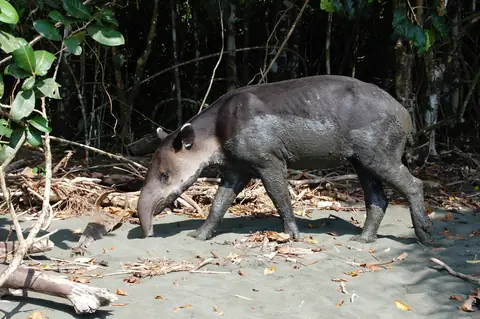
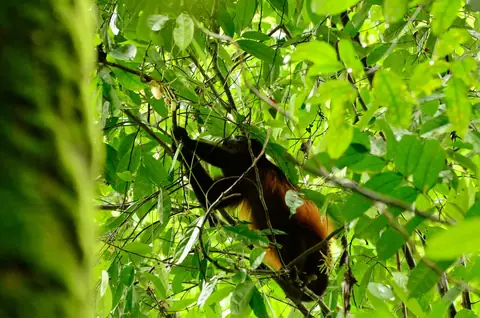
Corcovado protects the last large old-growth lowland rainforest on the Pacific coast of the Americas, about twenty times the size of Manuel Antonio, and it is often cited as holding around 2.5% of the world’s biodiversity. There are no roads inside: you arrive by boat from Drake Bay or Sierpe, or walk in from La Leona or Los Patos, always with a certified guide. Daily caps keep the trails quiet, and with luck you will see Baird’s tapirs, white-lipped peccaries, all four of Costa Rica’s monkey species and flocks of scarlet macaws.
It takes more planning and money, and in the rainiest months some sectors close. Read our full guide before booking. Corcovado guide: sectors, fees and guides →
How to visit both on one trip
- Drive from San José to Quepos (about 3 hours) and sleep near Manuel Antonio.
- Enter Manuel Antonio at opening time (not on a Tuesday), then continue south about 1.5 hours on the Costanera Sur to Uvita.
- Spend two or three nights on the Costa Ballena for whales, waterfalls and the Sierpe mangroves.
- Take the boat from Sierpe to Drake Bay and spend two or three nights for Corcovado and Caño Island.
Full day-by-day plans: Osa itineraries for 4, 7 and 10 days →
Frequently asked questions
Which is better, Corcovado or Manuel Antonio?
They are different trips. Manuel Antonio is small, easy to reach and great for a half day of monkeys, sloths and beach. Corcovado is huge and remote, needs a certified guide and more planning, and rewards you with tapirs, scarlet macaws and rainforest with very few people. If wildlife is the main reason for your trip and you have at least two days, choose Corcovado.
Can I visit both on the same trip?
Yes, and it is a natural route. Manuel Antonio is on the way south: spend a morning there, continue about an hour and a half along the Costanera Sur to Uvita, and later take the boat from Sierpe to Drake Bay for Corcovado.
Do I need a guide in Manuel Antonio?
No, but a naturalist guide with a spotting scope will show you far more animals, especially sloths and well-camouflaged species. In Corcovado a certified guide is mandatory.
Is Corcovado worth it for a day trip?
Yes. Day trips by boat from Drake Bay to Sirena or San Pedrillo are the most common way to visit. Two or three days, with a night at Sirena when it is open, give you the best chance of seeing tapirs and other shy animals.
Some links on this page are affiliate links. If you book through them, Pura Osa may earn a small commission at no extra cost to you. Recommendations are not paid. Prices, hours and schedules change; always confirm locally.