 Pura Osa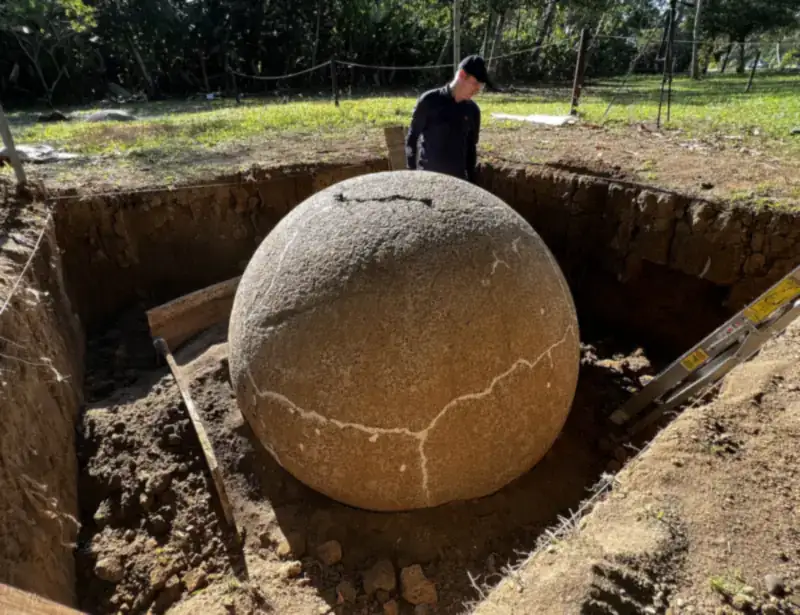
Key facts
- What: Sitio Museo Finca 6, run by the Museo Nacional de Costa Rica. One of four sites inscribed by UNESCO in 2014 as the Precolumbian Chiefdom Settlements with Stone Spheres of the Diquís, and the only one open to the public.
- Where: Palmar Sur, canton of Osa, on the road to Sierpe. About 15 min from Sierpe and 45 min from Uvita.
- Hours: Tuesday to Sunday, 8 a.m.–4 p.m. Closed Mondays.
- Entrance: foreign adults US$7, foreign students US$5; nationals ₡1,500 (Tue–Fri). Free for everyone on Saturdays and Sundays, until further notice.
- Contact: +506 2211-5847 · [email protected]
What you will see
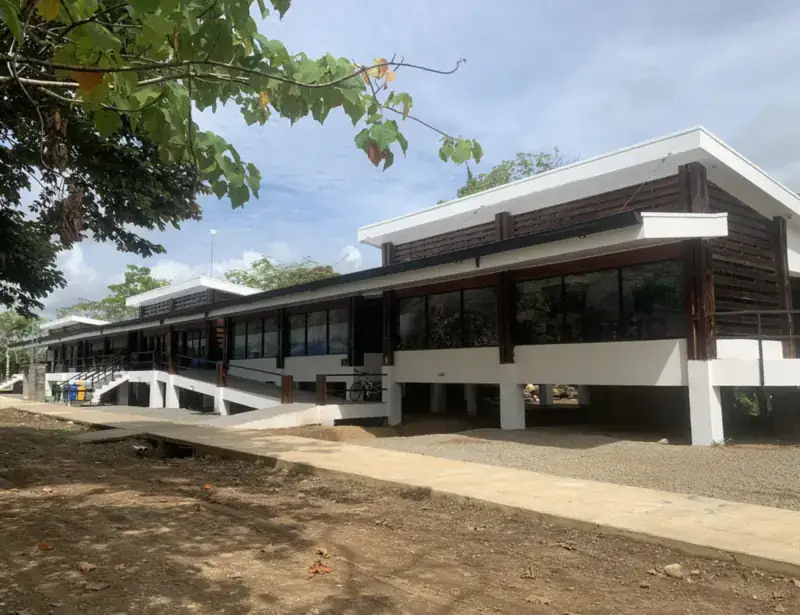
The visit starts at a modern visitor center with an exhibition about the chiefdoms of the Diquís delta: how people lived, farmed and traded here, the objects they left behind, and how the spheres were carved and moved. From there a short, flat path crosses about ten hectares of open grassland to the archaeological area.
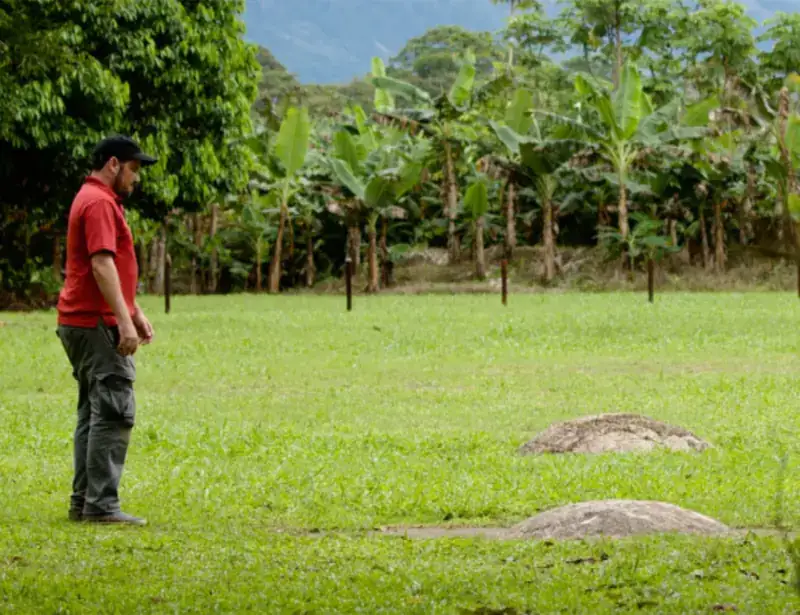
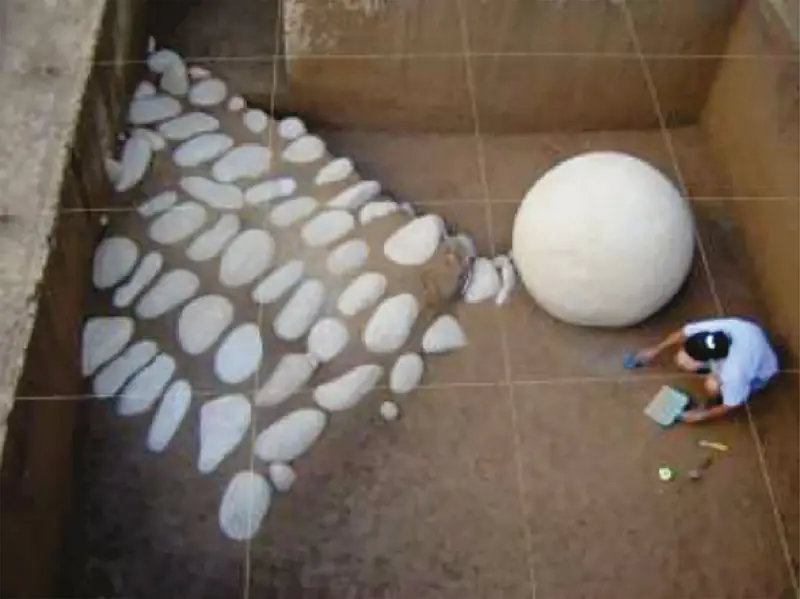
Out in the field you will find two low earth mounds with retaining walls of rounded river stones, the bases of large houses that belonged to the ruling families, and several spheres still in their original positions. UNESCO highlights Finca 6 as the only site that keeps spheres in their linear arrangements: two lines of three spheres each, which archaeologists believe marked the approach to the chiefs’ houses. The site also had a cemetery and a residential area, and it keeps a collection of spheres recovered by the Museum after they had been taken from their original places.
A short history of the spheres
People lived in the Diquís delta for many centuries before the Spanish arrived. Between about 500 and 1500 CE, the floodplain of the Térraba River was organized into chiefdoms: ranked societies with leaders, specialist craftsmen and large villages. They carved more than three hundred stone spheres, from a few centimetres across to more than two metres, the largest weighing around 15 tonnes. Most are gabbro, quarried in the hills and moved down to the plain without wheels or draft animals.
The spheres stayed hidden under river sediment until the 1930s, when the United Fruit Company cleared the delta for banana plantations; this site takes its name from the company’s “Farm 6”. Many spheres were broken by workers hunting for gold or moved to gardens and plazas across the country. The first scientific study, by archaeologist Doris Stone, was published in 1943. Excavations at Finca 6 began in 2005, the site museum opened in 2013, and UNESCO inscribed it as World Heritage the following year.
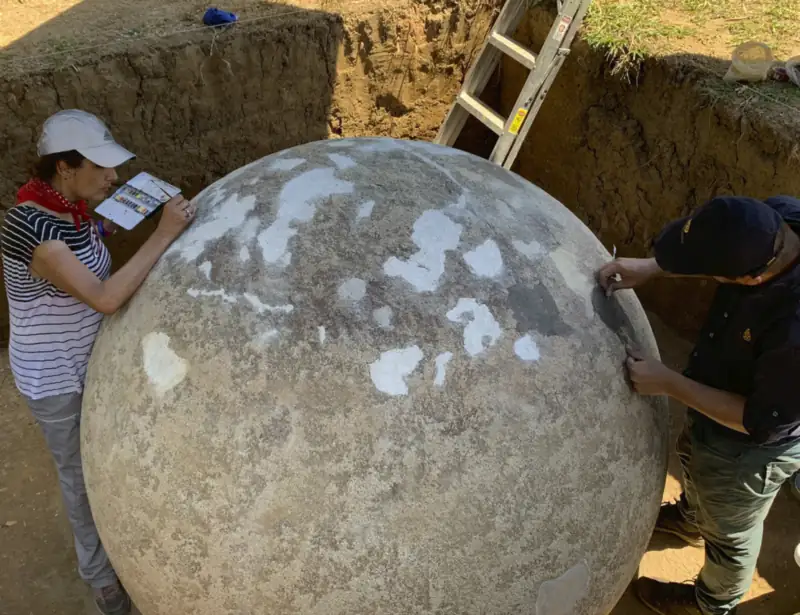
Please do not climb on, sit on or touch the spheres. Many have cracks and surface damage that the Museo Nacional works to stabilize, and they are protected by law as archaeological heritage.
The spheres and the sun
Twice a year, when the sun passes directly overhead in Costa Rica (the zenith sun), it rises in line with two spheres that remain in their original place at Finca 6. The Museo Nacional opens the site early, around 5–7 a.m., so visitors can watch the sunrise from the mound; in 2026 the second alignment was observed between 28 August and 3 September, and the first happens around April. Dates are announced on the Museum’s website and social media. Each year the region also celebrates a Festival de las Esferas, with music, crafts and food centered in Palmar Norte.
Tips for your visit
- Go early: the field has little shade and it gets hot by late morning. Bring water, a hat, sunscreen and insect repellent.
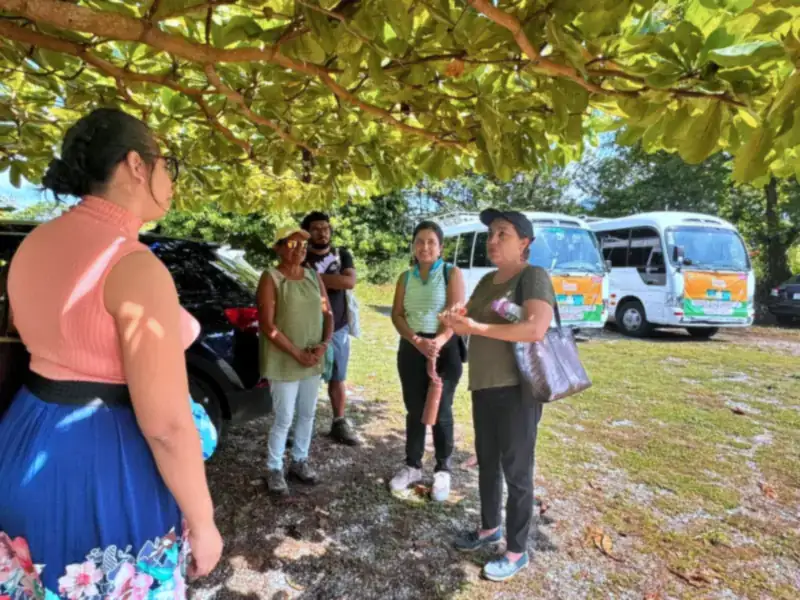
- Allow one to two hours. Ask at the visitor center about guided explanations by the Museum staff.
- Weekends are free for everyone (until further notice) and a little busier with Costa Rican families.
- Combine it with a morning mangrove tour in Sierpe or with the boat to Drake Bay, which leaves from Sierpe 15 minutes away.
- More spheres: on Caño Island, in public spaces around Palmar, and at the Museo Nacional in San José.
Where to stay nearby
Sierpe is the closest base, with riverside lodges and the boats to Drake Bay. Ojochal and Uvita, 35–45 minutes away, have the widest choice of hotels and restaurants on the Costa Ballena. Compare bases in Osa →
Frequently asked questions
Is Finca 6 worth visiting?
Yes, especially if you are already in Sierpe, Uvita or Ojochal. It is the only one of the four UNESCO World Heritage sites with stone spheres that is open to the public, and the only place where you can see spheres still lying in their original lines, next to the earth mounds where chiefs once lived. A visit takes one to two hours.
What are the opening hours and entrance fees?
Tuesday to Sunday, 8 a.m. to 4 p.m. (closed Mondays). Foreign adults pay US$7 and foreign students US$5 with ID; adults over 65 enter free. Costa Rican adults pay ₡1,500 from Tuesday to Friday, and children under 12 and students enter free. On Saturdays and Sundays entry is free for everyone until further notice. Fees as published by the Museo Nacional de Costa Rica in October 2026.
How old are the stone spheres and how were they made?
The chiefdom settlements of the Diquís date to roughly 500–1500 CE, and most spheres were carved in the later centuries before the Spanish conquest. Most are gabbro, a hard volcanic rock brought from the hills several kilometres away; a few are limestone or sandstone. They were shaped by pecking with harder stones and then polished with sand. Their exact meaning is still a mystery.
Is there gold inside the spheres?
No. That old rumor led banana workers in the 1930s and 1940s to break many spheres with dynamite looking for treasure. They are solid stone. Please do not climb on them: they are protected archaeological heritage.
Can I visit the other three UNESCO sites?
Batambal, El Silencio and Grijalba-2 are not open to the general public. Access for researchers and specialized groups must be arranged in advance with the administrator of Finca 6 at [email protected].
How do I get to Finca 6?
The site is in Palmar Sur, on the road from Palmar to Sierpe, about 15 minutes from Sierpe, 35 minutes from Ojochal and 45 minutes from Uvita. The road is paved and there is parking. Buses between Palmar Norte and Sierpe pass the entrance.
Photos: Museo Nacional de Costa Rica, used with credit. Hours and fees: Museo Nacional de Costa Rica (museocostarica.go.cr), October 2026; heritage details: UNESCO World Heritage Centre. Some links on this page are affiliate links. If you book through them, Pura Osa may earn a small commission at no extra cost to you. Recommendations are not paid. Prices, hours and schedules change; always confirm locally.