 Pura Osa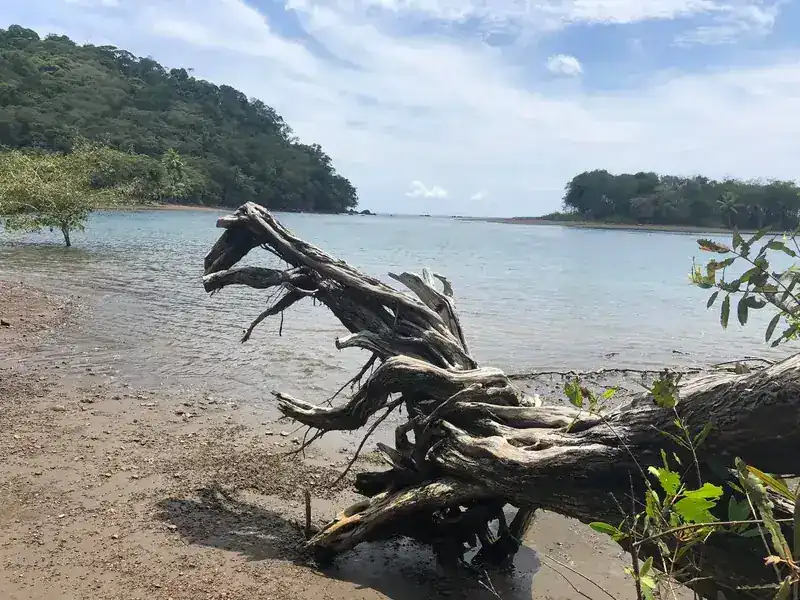
In short
- What it is: a sheltered tropical gulf about 50 km long, roughly 200 m deep inside, separating the Osa Peninsula from the mainland.
- Wildlife: resident bottlenose dolphins, coastal spotted dolphins and, in season, humpback whales from both hemispheres.
- Forest to the water: Piedras Blancas National Park and the Golfo Dulce Forest Reserve on one side, Corcovado on the other.
- Go by boat: water taxis link Golfito, Puerto Jiménez and the beaches in between.
A different kind of sea
Most of Osa faces the open Pacific. The Golfo Dulce does not. It is a long basin that is deep inside, about 200 m, and much shallower at its mouth, where a sill slows the exchange with the ocean. Scientists call it fjord-like, although glaciers did not carve it. Two things follow. The surface is usually calm, which makes it good for small boats, kayaks and swimming. And the deep water renews slowly, so near the bottom oxygen can be very low, an unusual feature in the tropics and a reason researchers keep studying it.
Who lives here, and when to look
| Animal | When and what to expect |
|---|---|
| Bottlenose dolphins | All year. A resident group of roughly a hundred animals. |
| Coastal spotted dolphins | All year. Larger groups, often a few hundred in the gulf. |
| Humpback whales (south) | Roughly July to November, with calves. |
| Humpback whales (north) | Roughly December to April; fewer animals in recent years. |
| Sea turtles | Nesting on some southern beaches; releases at Punta Banco usually November to January. See Punta Burica. |
| Scarlet macaws and toucans | All year, mostly at dawn and dusk along the forest edge. |
Numbers come from published research estimates and change over time; treat them as orders of magnitude, not a count.
Dolphins all year
Two kinds share the gulf. A group of bottlenose dolphins stays here year-round and many of the animals are known individually to researchers. Coastal spotted dolphins move in larger, livelier groups. Because the water is calm and the animals stay, dolphin trips here are among the most reliable in the country. Choose an operator that keeps its distance, limits time with the animals and follows the national rules for watching cetaceans.
Humpback whales: a nursery with a question mark
Humpbacks from the Southern Hemisphere arrive roughly from July to November, and those from the Northern Hemisphere from December to April. Mothers with calves favor the sheltered coast, which is why the gulf matters beyond tourism. For the full calendar, see our whale season guide, which covers Uvita and the Pacific side.
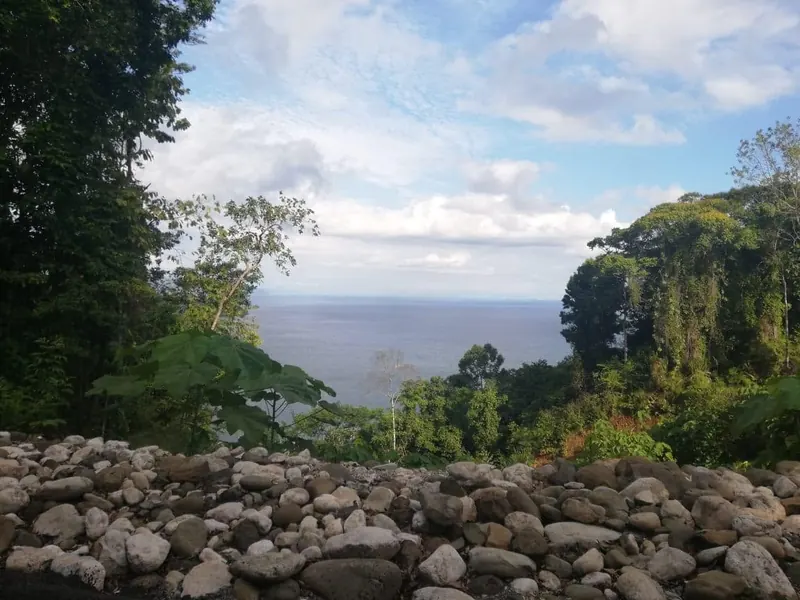
Forest down to the shoreline
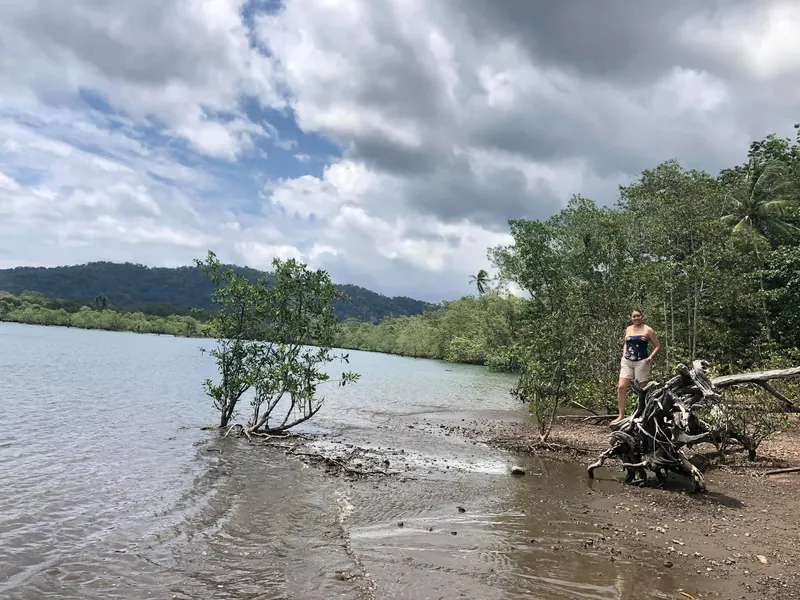
Behind the eastern shore, Piedras Blancas National Park protects about 14,000 hectares of lowland rainforest in the Esquinas area, and the Golfo Dulce Forest Reserve covers the surrounding hills. On the western side, Corcovado takes over. This continuous cover keeps the water clean and gives the gulf its green frame. Esquinas is also known to birders: the Río Esquinas area is one of the places to look for the yellow-billed cotinga, a rare bird of the Pacific southwest. See birdwatching in Osa.
Towns and beaches around the gulf
| Place | Where | What it is like |
|---|---|---|
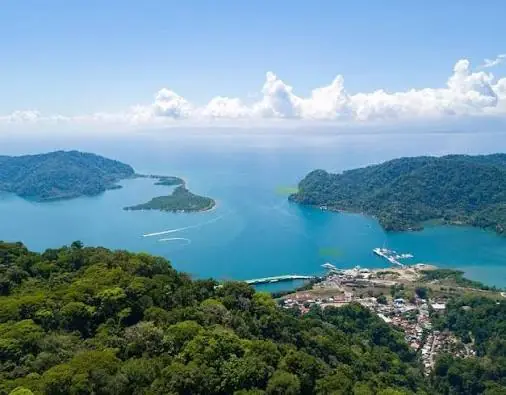
| Golfito | Eastern shore | Port town, marinas, sport fishing, Piedras Blancas forest behind. |
| Playa Zancudo | Mouth of the gulf | Long dark-sand beach, quiet, sunsets over the peninsula. |
| Pavones and Punta Banco | South, open Pacific | A world-famous left wave and a community turtle project. |
| Puerto Jiménez | Western shore | Gateway to Corcovado, boats to Golfito and the beaches across the gulf. |
| Matapalo | Peninsula tip | Beach town on the open Pacific side with waves and quiet lodges. |
How to visit it well
- Use the water. Water taxis connect Golfito, Puerto Jiménez and the lodges along the coast. Confirm schedules at the dock because they change.
- Go early. Mornings are calmer and clearer; afternoon storms are common in the rainy season, roughly May to November.
- Pick careful operators. Keep distance from dolphins and whales, never chase them and avoid operators who feed or crowd animals.
- Stay local. Family lodges, boat captains and community projects keep the income near the gulf.
Plan the rest: where to stay in Osa · interactive map · regenerative travel.
Frequently asked questions
Is the Golfo Dulce really a fjord?
Not in the strict sense, because it was not carved by glaciers. Scientists describe it as a fjord-like tropical basin: about 200 m deep inside, with a much shallower sill at the mouth that limits how fast deep water is renewed. That is why the bottom water is often low in oxygen.
When is the best time to see dolphins in the Golfo Dulce?
Any month. A group of bottlenose dolphins lives in the gulf all year, and coastal spotted dolphins are also common. Mornings are usually calmer for boat trips, and the rainy season brings more cloud and afternoon storms, so go early.
When do humpback whales visit the Golfo Dulce?
Two populations pass through: whales from the Southern Hemisphere arrive roughly from July to November, and whales from the Northern Hemisphere roughly from December to April. Mothers with calves are the main reason to look for them. In 2026 some guides reported seeing fewer whales than usual, so do not count on a sighting.
Are there protected areas around the gulf?
Yes. Piedras Blancas National Park (about 14,000 hectares of lowland rainforest) and the Golfo Dulce Forest Reserve cover much of the slopes behind the gulf, and Corcovado lies on the peninsula side. Together they keep forest running down to the water.
Is it safe to swim in the Golfo Dulce?
The calm beaches are popular for swimming, but conditions vary: check tides, avoid river mouths after heavy rain and follow local advice about currents and crocodiles in estuaries. Ask your lodge before going in.
How do I get around the gulf?
By boat. Water taxis link Golfito, Puerto Jiménez and the lodges and beaches along the coast, and the road around the gulf takes much longer. Schedules change, so confirm at the dock.
Some links on this page are affiliate links. If you book through them, Pura Osa may earn a small commission at no extra cost to you. Recommendations are not paid. Prices, hours and schedules change; always confirm locally.