 Pura Osa
The short answer
- Best months: September and early October (ICT).
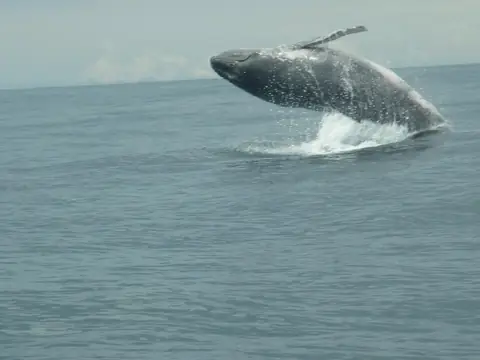
- Two seasons: southern humpbacks from July to November, northern humpbacks from December to April.
- Dolphins: all year.
- Tour: 2.5–4 hours, usually in the morning, about US$60–120. No guarantee.
Month by month
| Month | Chance of whales | What to expect |
|---|---|---|
| January – February | Fewer whales | Northern Hemisphere humpbacks, usually the best of that window; dry season, calm seas |
| March – April | Few | The northern season fades out; dolphins and turtles continue |
| May – June | Rare | Green season; dolphins are the main sighting |
| July | Building | Southern Hemisphere humpbacks arrive; the first 2026 sighting was on July 6 |
| August | Good | Mothers and calves are often seen |
| September | Best | Highest chance of a sighting according to the ICT; Whale and Dolphin Festival in the first weekend (2026: Sept 4–6) |
| October | Best early in the month | The first weeks are still strong; the season tapers off toward the end of the month |
| November | Tail end | Sources disagree on when the southern season ends (mid-October to mid-November); confirm with your operator |
| December | Starting | Northern whales begin to arrive; peak tourist season, so book early |
Based on the Costa Rican Tourism Board (ICT) through national press and on operator information, checked in October 2026. The peak of the northern season is an operator estimate, not an official figure. Our general guide to the park and the Whale Tail is here.
How to book the tour
| What | Detail |
|---|---|
| Duration | About 2.5–4 hours, usually with a morning departure (around 7:00–9:00; some operators also leave at 1:00 p.m.) |
| Price range | Roughly US$60–120 per person; one local operator publishes US$95 for adults and US$60 for children aged 3–10 |
| What is often included | Park entrance, naturalist guide, fruit, water and life vests; some operators charge the entrance separately |
| Where you board | From the beach at Uvita or Bahía Ballena. There is no dock: you wade to the boat, so wear shoes you can get wet |
| Cancellation (one operator) | 100% refund with 3 days’ notice or for bad weather; 50% from 3 days to 24 hours; nothing within 24 hours |
| Book ahead | Weeks ahead for the festival weekend and from December to April; with more than two days’ notice there is usually space in the main season |
Details checked in October 2026. The terms and prices in the table come from public listings, including the published terms of one local operator (Bahía Aventuras), used here only as an example and not as a recommendation. Always confirm what is included before you pay.
Questions to ask before you pay
- Is the park entrance included, and is the guide a certified naturalist?
- How many people travel per boat, and are there life vests for everyone?
- What happens if there is bad weather or no sighting?
- Does the operator follow the official whale-watching rules (below)?
What the rules say
- At least 100 m from whales (150 m from a mother with a calf or a single whale, 200 m if they are feeding or socializing), and 50 m from dolphins with the engine on or 30 m with it off.
- Speed up to 4 knots near the animals, no more than 30 minutes per group (15 with a mother and calf) and no more than two boats at a time.
- No swimming or diving with whales and dolphins.
These are the limits in Executive Decree 32495-MINAE-MOPT-MSP-MAG. A reform has been discussed since 2022, so confirm with SINAC or the ICT if you need the latest version.
Pair the boat with the tide for the Whale Tail
The sandbar of the Whale Tail is walkable from about two to three hours before low tide until roughly two hours after it, so arrive around an hour before low tide. Some days the low tide falls outside the park hours, so check a tide table first. A common plan is the whale tour in the early morning and the Tail walk when the tide is low, if it falls before the afternoon.
The Whale and Dolphin Festival
The festival takes place every September in Uvita: the 16th edition was on September 4–6, 2026, with special prices for Costa Ricans on some tours. Dates for 2027 had not been announced when we checked. Tours sell out on festival weekend, so book early.
Whales near Drake Bay and the Golfo Dulce
The southern humpbacks also reach the Golfo Dulce from July to November, with September and October the strongest, and bottlenose dolphins live there all year. If you are staying in Drake, you can combine whales with Caño Island; if you are in Uvita, some tours pair whales with Caño snorkeling. Caño Island: snorkel or dive →
If you live in Costa Rica
Marino Ballena has a national rate (₡1,130 for resident adults), and the festival weekend has offered special prices for Costa Ricans. For the rest, ask each operator for a national rate and book early for the festival. Our guide to weekends from San José shows how to fit Uvita into two days. Weekend trips from San José →
Where to stay in Uvita
Hotels, cabins and rentals in and around Uvita, with current prices. Book early for September and from December to April.
Live map: places to stay in Uvita
Hotels, cabins, lodges and vacation rentals in and around Uvita, with current prices. Move the map or set your dates to compare.
See the full list of places to stay in Uvita →
Marino Ballena on the map of OsaOpen map →Frequently asked questions
What is the best month to see whales in Uvita?
September and the first weeks of October, according to the Costa Rican Tourism Board (ICT). The southern humpbacks arrive from July and stay into November, but September has the highest chance of a sighting, often with mothers and calves.
Are there whales in Uvita in January or February?
Yes, but fewer. Humpbacks from the Northern Hemisphere pass through from about December to April; operators usually point to January and February as the best of that window, though this is not an official figure. Dolphins are seen all year.
Will I get a refund if we do not see whales?
Usually not. We did not find a general guarantee; some operators offer a discount or a repeat trip, so ask before you pay. Nature sets the schedule, and a good operator tells you that up front.
Can I swim with whales?
No. Costa Rica’s whale-watching rules prohibit swimming or diving with whales and dolphins, and they limit how close boats can go and how long they stay. A responsible operator will not make exceptions.
Is the park entrance included in the tour price?
It depends. Some operators include the Marino Ballena entrance, a naturalist guide, fruit, water and life vests; others charge the entrance separately, and it must be paid by card. Ask what is included so you can compare real prices.
Are whales also seen from Drake Bay?
Yes. Whales pass near Drake and Caño Island, and the southern humpbacks reach the Golfo Dulce from July to November, with September and October the strongest. Dolphins live in the gulf all year. Some Uvita tours combine whales with Caño Island snorkeling.
Some links on this page are affiliate links. If you book through them, Pura Osa may earn a small commission at no extra cost to you. Recommendations are not paid. Prices, hours and schedules change; always confirm locally.